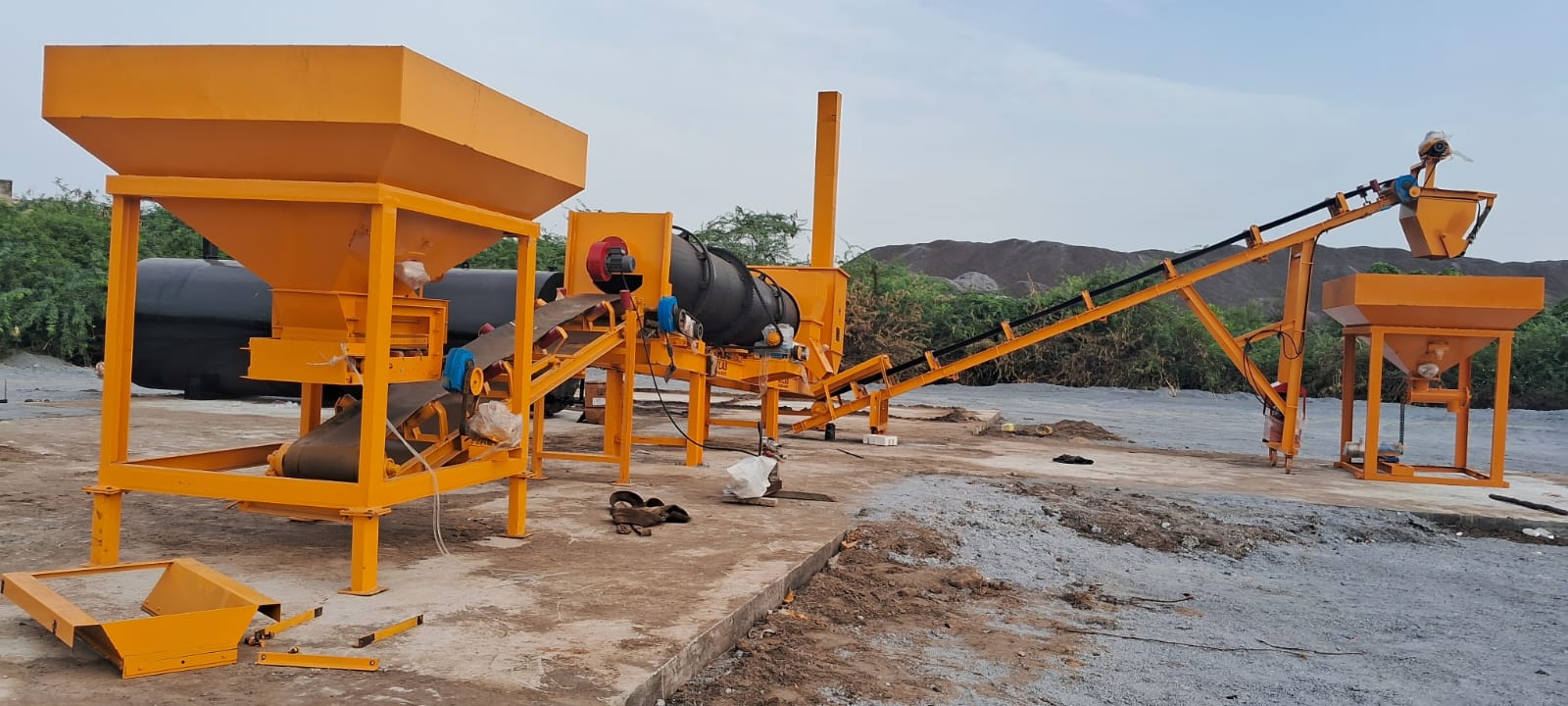
A compact and efficient plant designed for producing emulsion‑based cold asphalt mixes without conventional aggregate heating. Ideal for monsoon pothole repair, emergency road maintenance, patch repair, rural roads, premix carpet, bituminous macadam and other pavement maintenance applications. The plant provides controlled aggregate, water and bitumen‑emulsion dosing with uniform mixing for reliable cold‑mix production. Indian road guidance specifically identifies cold‑emulsion technology for pothole filling and patch repairs.
CAPACITY
10–60 TPH
EMULSION TYPE
RS / MS / SS
POWER
20–75 kW
The Atlas Cold Mix Asphalt Plant is an innovative, energy‑efficient solution for producing high‑quality cold mix asphalt using bitumen emulsion technology. Unlike traditional hot mix plants, the cold mix process does not require heating of aggregates or bitumen, resulting in significant energy savings and drastically reduced carbon emissions. It is particularly useful for road maintenance, pothole patching and monsoon repair work, because the material can be produced and laid without a conventional hot‑mix plant.
| Equipment | Function |
|---|---|
| Aggregate Feeder | Controls aggregate quantity |
| Bitumen Emulsion Tank | Stores cationic/other approved emulsion |
| Emulsion Pump & Dosing System | Precisely doses binder |
| Cold Mixing Unit | Uniformly coats aggregate with emulsion |
| Finished Mix Hopper | Temporary storage of prepared cold mix |
| Control Panel | Controls feeding, water and emulsion dosing |
| Conveyor | Transfers finished mix to truck/bagging system |
For emulsion‑based cold mixes, aggregate gradation, emulsion type, moisture content and curing conditions are critical. PMGSY documentation notes that cold‑mix production is preferably carried out close to the laying location because the mixed material can have limited transportability.
IRC/PMGSY material specifically identifies cold‑emulsion technology as advantageous where heating bitumen and aggregate to specified temperatures is difficult, particularly for maintenance work such as pothole filling and patch repairs.
For a plant specifically intended for monsoon pothole repair, a practical configuration includes:
There is not one universal set of "cold asphalt grades" equivalent to VG‑30/VG‑40. The mix is normally selected according to aggregate gradation, emulsion grade, traffic, layer and application. Indian guidance describes different emulsion types for different cold‑mix applications.
| Cold Mix Type | Typical Binder/Emulsion | Main Application |
|---|---|---|
| Pothole Repair Mix | Medium‑setting / suitable cationic emulsion | Monsoon pothole filling, emergency road repairs |
| Patch Repair Mix | Medium‑setting emulsion | Localized pavement patching |
| Cold Mix BM | Slow‑setting emulsion | Bituminous Macadam/base and binder layers |
| Cold Mix SDBC | Suitable cationic emulsion | Surface/binder course applications |
| Cold Mix MSS | Medium/slow‑setting emulsion | Mix Seal Surfacing |
| Slurry/Cold Slurry Mix | Slow‑setting emulsion | Surface maintenance and sealing |
| Cold Mix for Rural Roads | Emulsion‑based binder | Rural‑road construction and maintenance |
| Stockpile Cold Mix | Formulated emulsion | Material that can be stored for later patch repair, subject to formulation |
For a cold‑mix plant, the emulsion grade should be selected according to the specific mix design and application, rather than treating RS/MS/SS grades as interchangeable.
Commonly associated with tack‑coat applications.
Commonly used for surface dressing.
Commonly used for premix carpet and patch repair.
Commonly used for priming.
Used for several cold‑mix applications including BM, SDAC, BC, MSS and slurry seal, depending on the approved specification/mix design.
No heating of aggregates or bitumen—operates at ambient temperature, saving up to 80% energy compared to hot mix plants.
PLC‑controlled pump with high‑accuracy flow meter ensures consistent emulsion content for uniform mix quality.
Optional remote monitoring for production tracking, emulsion consumption, and plant performance.
Simple design with easy‑access panels and wear‑resistant components reduces downtime and service costs.
Quick relocation between project sites—ideal for rural roads, patchwork, and remote infrastructure projects.
On‑site commissioning, training, and spare parts support across 25 countries.
Emergency road repairs during monsoon seasons when hot mix plants are unavailable or difficult to operate.
Cost‑effective cold mix production for PMGSY and rural road connectivity projects where hot mix plants are not viable.
On‑demand production of cold mix for pothole repairs, surface patching, and road maintenance operations.
Ideal for challenging terrains where transporting hot mix is impractical—produces mix on‑site at ambient temperature.
Produce cold mix in bulk for stockpiling and later use—does not require heated storage or transport.
Production of base and binder layers using slow‑setting emulsions for durable pavement structures.
An Asphalt Cold Mix Bag Filling Machine is a heavy-duty packaging system specifically designed to handle sticky, cohesive, and abrasive cold-mix asphalt materials. Unlike free-flowing materials, cold mix asphalt requires specialized feeding mechanisms to prevent clogging and to accurately pack the material into bags (typically 25 kg to 50 kg) for retail or road repair use.
| Parameter | Standard Specifications |
|---|---|
| Material Handled | Asphalt Cold Mix, Cold Patch, Bituminous Cold Mix |
| Filling Range | 10 kg to 50 kg per bag |
| Production Speed | 1 to 2 bags per minute (Semi‑automatic) |
| Filling Accuracy | ± 0.5% to 1% of target weight |
| Weighing Principle | Gross/Net electronic load cell weighing |
| Power Supply | 3‑Phase, 380V/415V, 50Hz/60Hz |
| Air Consumption | 5–6 bar (for pneumatic gates and clamps) |
The plant is compatible with RS (Rapid Setting), MS (Medium Setting), and SS (Slow Setting) cationic and anionic emulsions. The dosing system is configurable for each grade.
Emulsion content typically ranges from 4% to 8% by weight of aggregates, depending on the aggregate type, desired mix properties, and project specifications.
Yes, cold mix asphalt produced by this plant can be used immediately after mixing. It can also be stockpiled for up to 3–4 weeks with proper storage conditions.
Yes, the plant is available in skid‑mounted and mobile configurations for quick relocation and setup at different project sites.
The plant can produce pothole repair mix, patch repair mix, cold mix BM, cold mix SDBC, cold mix MSS, slurry seal mix, rural road cold mix, and stockpile cold mix – covering the full range of emulsion‑based cold asphalt applications.
Yes, the plant is specifically designed for monsoon pothole repair work. It can be configured for mobile operation and uses medium‑setting emulsions that work effectively in wet conditions.
Get a tailored quote for your capacity, mobility, and project requirements.